
How to Paint - Our Product & Application Guides
Atelier Ellis makes natural, breathable paint and stains using mineral based materials.
We choose natural and unmodified ingredients that are the cleanest and safest to use, and we limit the use of preservative to the minimum needed. All of our formulations are water-based and they are also completely free from heavy metals, ammonia, glycols and micro-plastics, as well as chemical accelerants. We use a renewable bio-resin natural binder made from raw materials including sugar, bio ethanol, vegetable oil produced from waste crops, castor oil and/or linseed oil. Often referred to as plant-based, it provides a beautiful alternative to standard acrylic binders.
All of our paints are formulated to be highly breathable with trace or minimum VOC’s. They create safe homes, ensuring buildings breathe, regulate moisture and improve air quality. You can discover the correct application guides for all of our Paint & Stain formulations, as well as the full ingredients list below.
If you have any further questions, please just get in touch.
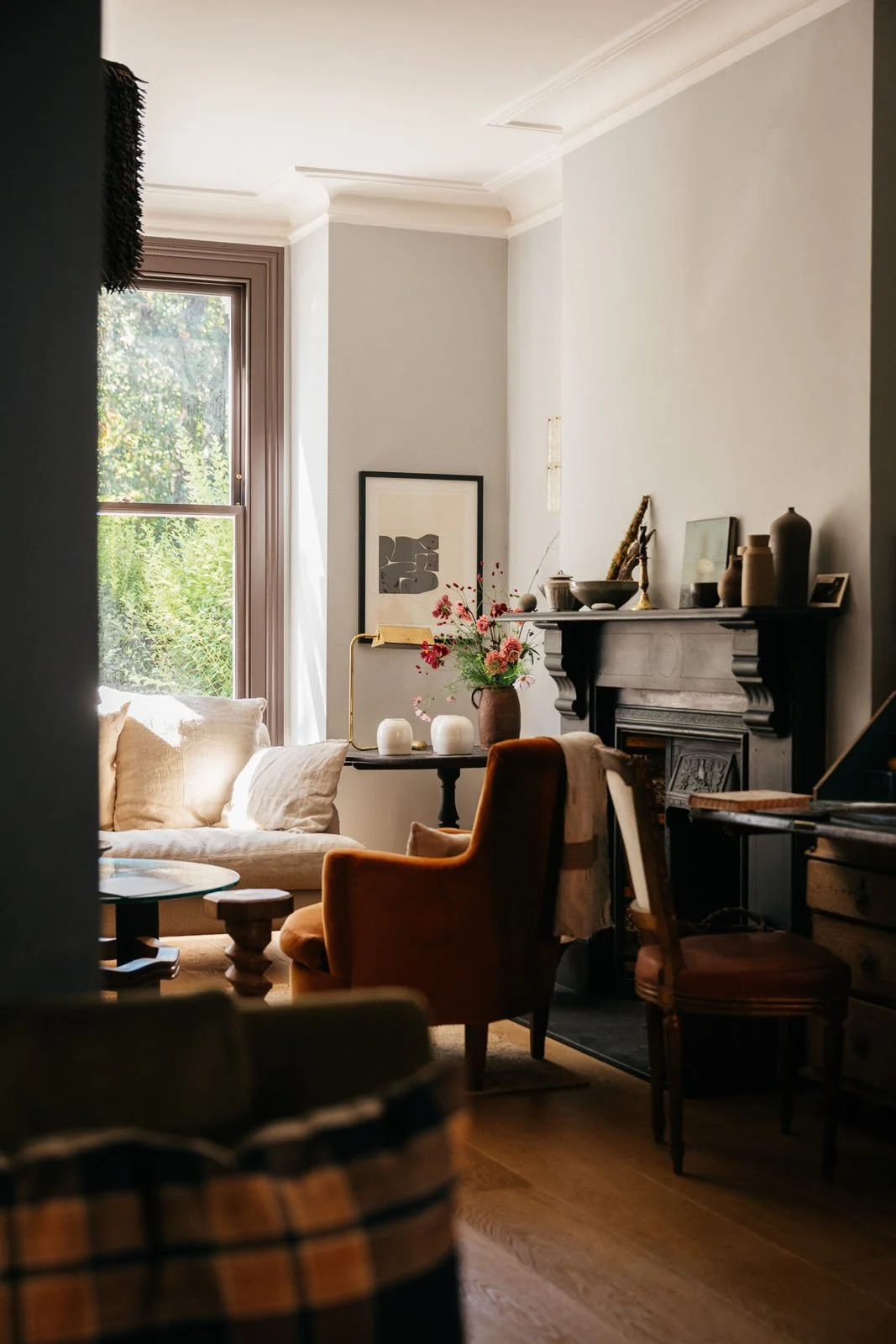
Paint
Our natural paint comes in five finishes: True Matt Emulsion, Steadfast Matt Emulsion, and Wood & Metal in Matt, Eggshell or Soft Gloss. Each is water-based and carries either trace or low-VOC only. Each finish is formulated for and suitable for different surfaces and rooms.
Discover the perfect finish for your project through our finish table below, and find out more about how to use our paint by downloading our Product & Application Guides.
Stains
Our Stain collection is created from natural materials such as glass, wax and cellulose. They are pioneering in their formulation and colour palette and offer a healthier and beautifully hued alternative to traditional oil wood stain. Like our natural paint formulations, they are virtually VOC-free, highly breathable and water-based.
Available in 32 unique colours, which are designed to harmonise with our paint colour palette.
They are suitable to use on any interior unfinished wood, stone and plaster finishes, including walls, kitchens and furniture.
Discover more through our Stain Product & Application Guide.
Our Paint Finishes
|
True Matt Emulsion |
Steadfast Matt Emulsion |
True Matt for Wood & Metal |
True Eggshell for Wood & Metal |
Soft Gloss for Wood & Metal |
|
|---|---|---|---|---|---|
| Sheen level | 3% | 5% | 5–8% | 20–25% | 60–70% |
|
Regular walls / gypsum plaster |
— | — | — | ||
| Lime plaster | — | — | — | ||
|
Wood - high contact interior and exterior (cabinetry, floors, doors) |
— | — | — | ||
|
Wood - low contact interior (skirting, cornicing) |
— | — | |||
|
Metal - interior and exterior (radiators, railings) |
— | — |
-
Main ingredients:
Filtered Water—Britain
Freshly pumped from our factory reservoir in East Sussex. Water acts as a solvent which allows paint to spread smoothly.
Pure Minerals—Britain
A balanced blend of dolomite and calcium carbonate in various particle sizes. This is to ensure great coverage and robustness and allows to fine-tune gloss levels. The PH stability of calcium carbonate also acts as a natural preservative, which allows us to minimise other preservatives.
Pigments—Britain and Europe
We use Titanium Dioxide as base pigment to adjust coverage, sheen level and how easily the paint spreads. We source the highest grades from the UK only, and do not use sulphate-based production sources, as this contributes to water pollution.
Our colours are formulated using up to 12 pigments, most of which are earth or mineral based, with some man-made where we believe this is a better environmental and human choice. All of them are VOC and APE free.
Bio-resin—Germany
We choose to use bio-resin rather than acrylic or vinyl-based options. It is made from simple, raw materials including sugar, bio ethanol, vegetable oil produced from waste crops, castor oil and/or linseed oil.
Additives:
Thickener—0.1% - Germany
Natural cellulose from wood or cotton linter. This helps regulate the viscosity, which facilitates application.
Dispersing agent—0.1% - France
This helps prevent the pigment from lumping together.
Defoamer—0.05% - Netherlands
This helps prevent the formation of foam.
Flash-rust inhibitor—0.01% - Britain
This protects the tins from corrosion.
Preservative—0.0013% - Britain
Isothiazolinone – a man-made organic preserving compound. This is our only preservative, and it is necessary to prevent the raw materials from becoming mouldy, but we use the minimum viable amount possible– 13ppm.
PH modifier—0.001% – Britain
This counteracts variations in other raw materials and to maintain the stability of the paint. We choose our formulation to be PH neutral, so that they can be used on the widest variety of surfaces, including lime plaster and previously painted lime and other mineral based paints. This avoids the need for additional primers or preparatory products.
-
Main ingredients:
Filtered Water—Britain
Freshly pumped from our factory reservoir in East Sussex. Water acts as a solvent which allows paint to spread smoothly.
Pure Minerals—Britain
A balanced blend of dolomite and calcium carbonate in various particle sizes. This is to ensure great coverage and robustness and allows to fine-tune gloss levels. The PH stability of calcium carbonate also acts as a natural preservative, which allows us to minimise other preservatives.
Pigments—Britain and Europe
We use Titanium Dioxide as base pigment to adjust coverage, sheen level and how easily the paint spreads. We source the highest grades from the UK only, and do not use sulphate-based production sources, as this contributes to water pollution.
Our colours are formulated using up to 12 pigments, most of which are earth or mineral based, with some man-made where we believe this is a better environmental and human choice. All of them are VOC and APE free.
Bio-resin—Germany
We choose to use bio-resin rather than acrylic or vinyl-based options. It is made from simple, raw materials including sugar, bio ethanol, vegetable oil produced from waste crops, castor oil and/or linseed oil.
Wax—Britain
We use natural wax to give our Steadfast Emulsion paint its resistant properties.
Additives:
Thickener—0.1% - Germany
Natural cellulose from wood or cotton linter. This helps regulate the viscosity, which facilitates application.
Dispersing agent—0.1% - France
This helps prevent the pigment from lumping together.
Defoamer—0.05% - Netherlands
This helps prevent the formation of foam.
Flash-rust inhibitor—0.01% - Britain
This protects the tins from corrosion.
Preservative—0.0013% - Britain
Isothiazolinone – a man-made organic preserving compound. This is our only preservative, and it is necessary to prevent the raw materials from becoming mouldy, but we use the minimum viable– 13ppm.
PH modifier—0.001% – Britain
This counteracts variations in other raw materials and to maintain the stability of the paint. We choose our formulation to be PH neutral, so that they can be used on the widest variety of surfaces, including lime plaster and previously painted lime and other mineral based paints. This avoids the need for additional primers or preparatory products.
-
Main ingredients:
Filtered Water—Britain
Freshly pumped from our factory reservoir in East Sussex. Water acts as a solvent which allows paint to spread smoothly.
Pure Minerals—Britain
A balanced blend of dolomite and calcium carbonate in various particle sizes. This is to ensure great coverage and robustness and allows to fine-tune gloss levels. The PH stability of calcium carbonate also acts as a natural preservative, which allows us to minimise other preservatives.
Pigments—Britain and Europe
We use Titanium Dioxide as base pigment to adjust coverage, sheen level and how easily the paint spreads. We source the highest grades from the UK only, and do not use sulphate-based production sources, as this contributes to water pollution.
Our colours are formulated using up to 12 pigments, most of which are earth or mineral based, with some man-made where we believe this is a better environmental and human choice. All of them are VOC and APE free.
Water–based Emulsion Resin—Britain
A binder is what makes paint stick onto a surface. For our Wood & Metal paint, rather than acrylic or vinyl, we use a binder from a carbon neutral supplier who is ISO–14001 Responsible Care Approved and has earned the Energy Star Award for sustained excellence five years in a row.
Wax—Britain
We use natural wax to give our Wood & Metal paint its resistant properties.
Additives:
Thickener—0.1% - Germany
Natural cellulose from wood or cotton linter. This helps regulate the viscosity, which facilitates application.
Dispersing agent—0.1% - France
This helps prevent the pigment from lumping together.
Defoamer—0.05% - Netherlands
This helps prevent the formation of foam.
Flash-rust inhibitor—0.01% - Britain
This protects the tins from corrosion.
Preservative—0.0013% - Britain
Isothiazolinone – a man-made organic preserving compound. This is our only preservative, and it is necessary to prevent the raw materials from becoming mouldy, but we use the minimum viable– 13ppm.
PH modifier—0.001% – Britain
This counteracts variations in other raw materials and to maintain the stability of the paint. We choose our formulation to be PH neutral, so that they can be used on the widest variety of surfaces, including lime plaster and previously painted lime and other mineral based paints. This avoids the need for additional primers or preparatory products.
-
Main ingredients:
Filtered Water—Britain
Freshly pumped from our factory reservoir in East Sussex. Water acts as a solvent which allows paint to spread smoothly.
Pure Minerals—Germany
We use Silicon Dioxide (glass) to give our stain transparency and robustness.
Pigments—Britain and Europe
We use Titanium Dioxide as base pigment to tune coverage, sheen level and how easily the paint spreads. We source the highest grades from the UK only, and do not use sulphate-based production sources, as this contributes to water pollution.
Our colours are formulated using up to 12 pigments, most of which are earth or mineral based pigments, with some man-made where we believe this is a better environmental and human choice. All of them are VOC and APE free.
Bio-resin — Germany
We choose to use bio-resin rather than acrylic or vinyl-based options. It is made from simple, raw materials including sugar, bioethanol, vegetable oil produced from waste crops, castor oil and/or linseed oil.
Wax—Britain
We use natural wax to give our Stain its resistant properties.
Additives:
Thickener—0.1% - Germany
Natural cellulose from wood or cotton linter. This helps regulate the viscosity, which facilitates application.
Dispersing agent—0.1% - France
This helps prevent the pigment from lumping together.
Defoamer—0.05% - Netherlands
This helps prevent the formation of foam.
Flash-rust inhibitor—0.01% - Britain
This protects the tins from corrosion.
Preservative—0.0013% - Britain
Isothiazolinone is a man-made organic preserving compound. This is our only preservative, and it is necessary to prevent the raw materials from becoming mouldy, but we use the minimum viable amount possible– 13ppm.
PH modifier—0.001% – Britain
This counteracts variations in other raw materials and to maintain the stability of the paint. We choose our formulation to be PH neutral, so that they can be used on the widest variety of surfaces, including lime plaster and previously painted lime and other mineral based paints. This avoids the need for additional primers or preparatory products.